Want to receive Best Practice Bulletin directly to your inbox?
Sign up here.
Want to receive Best Practice Bulletin directly to your inbox?
Sign up here.
Published: 22nd May, 2026
Contents
New from bpacnz: CKD peer group discussion and clinical audit
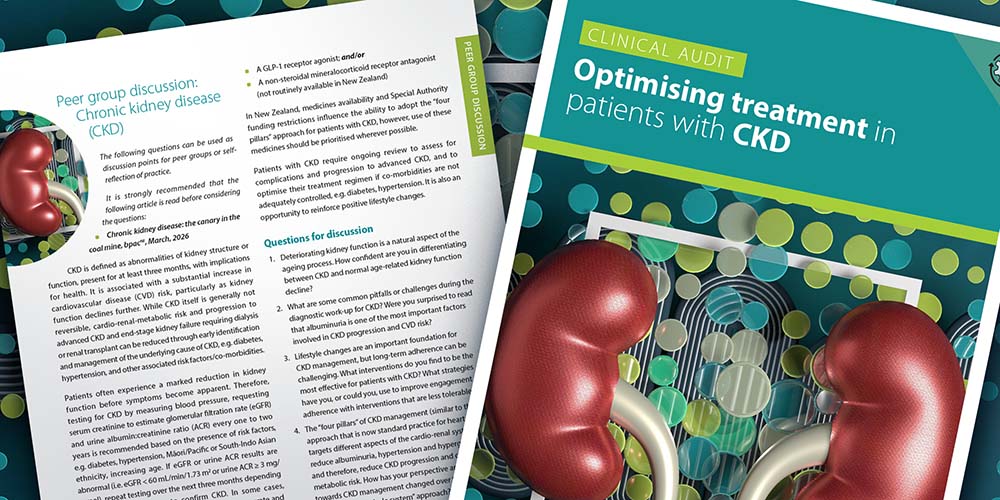
In March, we published an updated article on the diagnosis and management of chronic kidney disease (CKD). We have now developed a peer group discussion for this topic, to be used among peer/study groups or for self-reflection of practice. We pose some of the more challenging questions and let you and your peers think about the solutions, e.g. What are some common pitfalls or challenges during the diagnostic work-up for CKD? How do you approach conversations around self-funding empagliflozin? In your experience, what are the most common complications that occur as CKD progresses?
Read the peer group discussion here
As a continuation of this theme, we have also published a clinical audit on the management of patients with CKD. This audit helps healthcare professionals ensure that patients with CKD are prescribed optimal treatment, i.e. an ACE inhibitor/ARB, SGLT-2 inhibitor and/or a GLP-1 receptor agonist depending on their clinical circumstances. This is a “working audit” in which you identify eligible patients opportunistically during consultations for any reason.
Read the audit here
Participating in a peer group discussion and completing a clinical audit are CPD-eligible activities; find out more here.
Round up of the latest bpacnz publications

We regularly add new content to our website – browse resources under the “articles" tab or search for a topic you are interested in. Here are some of our most recently published resources:
Migraine – much more than just a headache

Migraine is a complex neurological condition that can significantly impact quality of life; it is much more than just a headache. Migraine is a lifelong journey, and everyone’s experience is different. Patients with frequent and severe episodes require ongoing reassurance and support to find an effective migraine preventative medicine; this is often a trial and error process, involving multiple medicines over time. The article also includes a personal story from Migraine Foundation co-founder Dr Fiona Imlach to help healthcare professionals understand the impacts of migraine.
"I sometimes think of migraine as my health watchdog, that bites me when I stray too far from the path of well-being and zen. But often the dog goes rabid, and bites me when there is no need.”- Dr Fiona Imlach
Read the article here. A B-QuiCK summary is also available.
Pharmacological management of ADHD in adults and children: a new frontier for primary care

bpacnz has developed a comprehensive resource to guide primary care clinicians when prescribing psychostimulant medicines for ADHD in adults. This includes a summary of funded medicines and their characteristics, pre-treatment considerations and investigations, initiation and dose titration, monitoring, switching between formulation types and treatment cessation. The extension of ADHD management into primary care presents a new opportunity for clinicians to address established treatment barriers and explore a new frontier. N.B. This article does not cover the diagnosis of ADHD or the use of psychostimulant medicines for other indications such as narcolepsy.
Read the article here. A B-QuiCK summary is also available.
Management of genital herpes

From a medical perspective, genital herpes is a straight-forward, easily treated condition for most patients. However, significant social stigma is often associated with a diagnosis. Effective management of genital herpes requires consideration of both medical and psychosocial implications. We present an overview of the management of patients with genital herpes, covering key clinical points from the 2024 New Zealand guidelines from the Sexually Transmitted Infections Education Foundation.
Read the article here. A B-QuiCK summary is also available.
 Rewind: Wrap-up of recent key messages
Key dates and updates on news items from recent editions of Best Practice Bulletin:
- A decision has been made by Pharmac to widen the range of clinical services and funded medicines offered in community pharmacy from 2nd June, following consultation on a proposal (as reported in Bulletin 146)
- Pharmac consultation on the review of the Exceptional Circumstances Framework closes on Sunday, 7th June; see Bulletin 144
- Stock of ticagrelor 90 mg tablets has arrived in the country. This follows a period of limited supply (as reported in Bulletin 143).
- The supply issue affecting ezetimibe 10 mg + simvastatin 40 mg combination tablets (as reported in Bulletin 146) has widened to also affect the 10/80 mg presentation; an alternative brand (not Medsafe approved) of this strength will be listed on 1st June. Patients may need to be prescribed ezetimibe and simvastatin separately if combination presentations are out of stock.
- The number of measles cases in New Zealand has risen to four, with an additional case since last reported in Bulletin 147. View the update from Health New Zealand here.
bpacnz focus: Appropriate use of ketamine in a community setting
Since 1st March, 2026, ketamine (Ketalar; 200 mg/2 mL) has been funded if endorsed to treat intractable pain in patients receiving palliative care (unapproved indication).1, 2 It can be supplied on prescription, Practitioner Supply Order (PSO; up to five 2 mL vials) for general practice and Bulk Supply Order (BSO; any reasonable monthly quantity) for rest homes and hospices.1, 2 In addition to its use in palliative care, Ketalar; 200 mg/2 mL is also funded on PSO if endorsed for use in a Primary Response in Medical Emergencies (PRIME) service.1 These changes were part of a wider decision by Pharmac to fund ketamine along with the following other medicines in the community for trauma and medical emergencies: enoxaparin, droperidol, glucose, methoxyflurane and tranexamic acid (as reported in Bulletin 141).1
Previously, ketamine was only funded in hospitals, or in the community through the Named Patient Pharmaceutical Assessment (NPPA) process. It is also used by ambulance services. The funding changes are not intended to widen the population who should be prescribed ketamine, but rather to assist in easing access to treatment for intractable pain for people receiving palliative care in the community, as well as removing barriers to accessing emergency treatments for people who live in rural and remote areas.
Prescribing ketamine for intractable pain is typically co-ordinated in a palliative care specialist setting; Pharmac expects approximately 75 people per year would receive ketamine for this indication.1 There is no requirement or expectation for primary care clinicians to prescribe ketamine, but the change does provide clinicians in the community who have experience in palliative care, with a further treatment option if it is considered appropriate for a patient.
Administering ketamine will be an unfamiliar practise for most primary care clinicians. For those who intend to prescribe ketamine or just want to increase their knowledge about this medicine, we provide an overview of how ketamine works and when it might be considered.
Read more about ketamine: pharmacology, adverse effects, indications and use
An overview of the pharmacology of ketamine
The pharmacology of ketamine is complex. Ketamine is primarily a non-competitive NMDA-receptor antagonist that exerts anaesthetic, analgesic and other properties, depending on the dose, e.g. analgesia with low doses, amnesia and dissociation with larger doses and anaesthesia with high doses.3, 4 To a lesser extent, ketamine acts on other receptors and signalling pathways, e.g. monoaminergic receptors.5, 6 Besides its established use in medicine (see: “Indications and prescribing information”), ketamine is also misused as a recreational drug for its dissociative and hallucinatory properties.
NMDA receptors are located throughout the central nervous system (CNS), and have a range of functions, including a role in pain transmission and modulation.4 Activation of these receptors (e.g. by glutamate, an excitatory amino acid and neurotransmitter) triggers a cascade of signalling events and messenger systems which can result in an increased response to pain stimuli over time (i.e. pain sensitivity; hyperalgesia) and decreased sensitivity to opioid receptor agonists (i.e. opioid tolerance).4 Therefore, by blocking the NMDA receptor, ketamine can cause less pain sensation and reduce tolerance to opioids.4, 6
Tolerability and safety profile
Ketamine has a short duration of action (usually 10 – 60 minutes; half-life: 2 – 4 hours), and is generally safe at lower doses.3, 4 Adverse effects tend to vary in severity and frequency depending on factors such as route of administration, dose and patient co-morbidities. Older people may have a lower threshold for experiencing adverse effects.7 Possible adverse effects include hallucinations, nightmares, delirium, nausea, vomiting, diplopia, nystagmus, bronchial secretions, hypertension, tachycardia and bronchospasm.7, 8 N.B. Urinary symptoms can develop, such as increased frequency, dysuria and incontinence, but this is typically associated with misuse of ketamine (i.e. long-term use of high doses).7
A patient information sheet about ketamine has been developed by the Australia New Zealand Society of Palliative Medicine.
Indications and prescribing information
Ketamine is indicated for the induction and maintenance of anaesthesia and is used off-label for a range of other clinical situations, including pain (e.g. opioid-refractory pain, neuropathic pain non-responsive to other treatments, central sensitisation, opioid-induced hyperalgesia, rapid control of severe pain in an acute setting), opioid-tolerance reversal, severe agitation and treatment-resistant depression.7, 8
Ketamine is classified as a Class C4 Controlled Drug. It is available in different strengths and presentations (click here for details), however, only Ketalar 200 mg/2 mL is funded in the community by endorsement. This medicine is approved for intramuscular or intravenous administration, therefore, administering subcutaneously (including subcutaneous infusions) or orally would be off-label (see box for further details).
Place of ketamine treatment in a palliative care setting
In a palliative care setting, people may experience pain related to:
- Their terminal illness, e.g. bone pain from cancer metastases, pressure on organs or bones from tumours or metastases, headache due to raised intracranial pressure from a brain tumour or metastases, musculoskeletal pain associated with progressive neurological diseases such as motor neurone disease
- Chronic conditions, e.g. heart failure, multiple sclerosis, COPD, arthritis
- Treatment-related adverse effects, e.g. mucositis, neuropathy, infection, lymphoedema, constipation/bowel obstruction
- Other related conditions such as pressure ulcers or oral candidiasis
In addition to physical causes, pain can be exacerbated by psychosocial factors, including fear/anxiety and spiritual distress.
In most cases, pain can be managed with the use of analgesics (usually opioids), and co-analgesics/adjuvant medicines depending on the type of pain (e.g. bisphosphonates for bone pain, benzodiazepines for skeletal muscle spasm pain, corticosteroids for tenesmus or raised intracranial pressure, gabapentinoids or antidepressants for neuropathic pain), alongside non-pharmacological strategies as appropriate. Click here for non-pharmacological and pharmacological pain management options. N.B. These options are specific to pain in the last days of life, but many of the principles are likely to apply to palliative care in general.
For some people, however, pain is refractory to these measures despite optimised treatment regimens. Low-dose ketamine may be suitable for this patient group, i.e. patients with intractable pain who are receiving palliative care (unapproved indication). It can be used alone, or in combination with other analgesics; CNS effects may be increased with concomitant use of other CNS depressants, e.g. opioids.8 N.B. The Aotearoa Specialist Palliative Care Guidelines recommend that ketamine only be used by specialists.7
Dosing information for ketamine is available from the Aotearoa Specialist Adult Palliative Care Guidelines and Palliative Care Handbook New Zealand.
 Ketamine must be prescribed and used in line with Section 25 of the Medicines Act 1981
Prescribers should be aware that Ketalar is not approved by Medsafe for subcutaneous or oral use or for intractable pain in palliative care and therefore prescribing should comply with Section 25 of the Medicines Act 1981.9 This allows authorised prescribers to “procure the supply of any medicine” for a patient in their care; meaning that prescribers may prescribe any medicine to a patient (within their scope of practice), regardless of whether it is approved or unapproved in New Zealand. It also allows an authorised prescriber to prescribe an approved medicine off-label, i.e. for an unapproved use. However, an adequate professional and ethical standard of care must always be provided, which includes gaining informed consent from the patient regarding off-label use of the medicine.9
Overview of the use of ketamine in PRIME services
The main role for ketamine in a PRIME service setting is likely to be related to the treatment of severe acute pain (e.g. trauma-related pain, burn pain), and to induce dissociation to allow a painful procedure to be performed (e.g. fracture realignment, cardioversion). Other scenarios where ketamine could be used in an emergency or trauma setting may include patients with acute behavioural disturbances or severe agitation that is associated with a risk to safety, and rapid sequence intubation.3 Ketamine may be suitable for use in a trauma setting in patients who are hypotensive as it can maintain or increase blood pressure and heart rate.4, 6
PRIME services in New Zealand are administered by St John. PRIME practitioners undergo specialised training and generally follow the Emergency Ambulance Service Clinical Practice Guidelines to inform the use of ketamine in this setting.
References
- Pharmac | Te Pātaka Whaioranga | NZ Government. Decision to fund treatments in the community for trauma and medical emergencies, and ketamine for palliative care. 2026. Available from: https://www.pharmac.govt.nz/news-and-resources/consultations-and-decisions/2026-02-decision-to-fund-treatments-in-the-community-for-trauma-and-medical-emergencies-and-ketamine-for-palliative-care (Accessed May, 2026).
- Pharmac | Te Pātaka Whaioranga | NZ. Pharmaceutical Schedule. Available from: https://schedule.pharmac.govt.nz/ScheduleOnline.php (Accessed May, 2026).
- St John clinical practice guidelines. Available from: https://cpg.stjohn.org.nz/tabs/medicines/page/ketamine-eas (Accessed May, 2026).
- Richards ND, Howell SJ, Bellamy MC, et al. The diverse effects of ketamine, jack-of-all-trades: a narrative review. Br J Anaesth 2025;134:649–61. doi:10.1016/j.bja.2024.11.018.
- Natoli S. The multiple faces of ketamine in anaesthesia and analgesia. DIC 2021;10:1–14. doi:10.7573/dic.2020-12-8.
- Duong HG, Pulskamp TG, Berlau DJ. Ketamine for acute and chronic pain: beyond anaesthesia. Pain Manag 2026;:1–11. doi:10.1080/17581869.2026.2627884.
- Hospice NZ. Aotearoa specialist adult palliative care guidelines. Available from: https://www.hospice.org.nz/spc_guidelines (Accessed May, 2026).
- Hospice NZ. Te Puka Manaaki Pairuri o Aotearoa – Putanga Tuatahi The Palliative Care Handbook New Zealand – First Edition. 2024. Available from: https://www.hospice.org.nz/palliative_care_handbook (Accessed May, 2026).
- Medsafe. Use of unapproved medicines and use of approved medicines for an unapproved purpose. Updated 2025. Available from: https://www.medsafe.govt.nz/profs/riss/unapp.asp (Accessed May, 2026).
 This Item was supported by Pharmac
Medicine news
The following news relating to medicine supply has recently been announced. These items are selected based on their relevance to primary care and where issues for patients are anticipated, e.g. no alternative medicine available or changing to the alternative presents issues. Information about medicine supply is available in the New Zealand Formulary at the top of the individual monograph for any affected medicine and summarised here.
Morphine 10 mg/mL oral liquid to go out of stock
Morphine 10 mg/mL oral liquid (RA-Morph) is expected to temporarily go out of stock; remaining stock in the supply chain expires at the end of May. The next shipment is due to arrive in June. Patients will require a new prescription for a different strength of morphine oral liquid if the 10 mg/mL product is out of stock. Pharmacists are advised to ensure that affected patients are aware of the new strength they are being dispensed and the dose they should take.
Supply issue affecting stock of naproxen
Stock of naproxen 250 mg and 500 mg tablets (Noflam), a NSAID, is expected to run out due to manufacturing issues. A re-supply date is yet to be announced. Two alternative brands have been listed on the Pharmaceutical Schedule: Noflam 250 (250 mg) and Inza (250 mg and 500 mg). The Noflam 250 brand is currently available. The Inza brand will be released by the supplier once stock of Noflam 250 runs out.
Reassure patients that there has been no change to the active ingredient. Pharmacists should be aware the pack sizes will be different. The original brand (Noflam) was packaged in bottles containing 250 or 500 tablets; Noflam 250 comes in a 90-tablet blister pack (with “Naproxen Mylan” printed on the foil) and both strengths of Inza come in bottles of 50 tablets. The Inza brand of tablets will also have different markings to Noflam but are similar in colour and shape.
A letter for healthcare professionals with more details on the blister packaging for Noflam 250 is available here.
Itraconazole capsules out of stock
Itraconazole 100 mg capsules (Itrazole), an antifungal, are out of stock due to manufacturing issues. Re-supply is expected late 2026. An alternative brand is available (Itraconazole Crescent); however, it is not approved by Medsafe, therefore will need to be prescribed for supply under Section 29A of the Medicines Act.
Pharmac proposals: amendment to Special Authority criteria for type 2 diabetes medicines + changes to some vaccine brands and access
Type 2 diabetes medicines
Pharmac is seeking feedback on a proposal to amend Special Authority criteria and widen access to the following medicines for patients with type 2 diabetes who are at risk of cardio-renal complications: empagliflozin, empagliflozin + metformin, dulaglutide and liraglutide.
It is proposed that from 1st August, 2026:
- The five-year cardiovascular disease risk threshold criterion would be reduced from ≥ 15% to ≥ 10%
- The criterion allowing Māori and Pacific peoples to access these medicines without demonstrating specific cardio-renal risk would be removed
The changes would only apply to new Special Authority applications, meaning that patients with existing Special Authority approvals (which are valid without further renewal) would be unaffected.
Consultation closes Thursday, 28th May. This link contains an online form to complete.
Vaccines
In a separate consultation, Pharmac is seeking feedback on a series of proposals relating to vaccines. In particular, it is proposed that:
- Funded access to the influenza vaccine (Flucelvax) would be widened to include children aged six months up to age five years
- Pneumococcal vaccine PCV20 would be funded for secondary prophylaxis in people who have previously had invasive pneumococcal disease
- New supply agreements would be entered into for 17 funded vaccines and one diagnostic test in the National Immunisation Schedule. This would result in a change to the funded brand of meningococcal ACWY, pneumococcal and influenza vaccines.
If accepted, these changes would be implemented throughout 2027.
Consultation closes Friday, 19th June. This link contains an online form to complete.
Practice change: Co-prescribing amoxicillin + clavulanic acid and amoxicillin in adults
Te Whata Kura – National Antibiotic Guidelines became available in late 2025. In a recent communication to the sector, the Health New Zealand Antimicrobial Stewardship (AMS) Working Group and the Te Whata Kura development team outlined a new protocol for combination dosing of amoxicillin + clavulanic acid plus amoxicillin for specific indications in adult patients. N.B. This does not apply to all clinical situations where amoxicillin + clavulanic acid is indicated.
Amoxicillin + clavulanic acid 625 mg (500 mg + 125 mg), three times daily, PLUS amoxicillin 500 mg three times daily (with food)
This dose combination (amoxicillin 1,000 mg with clavulanic acid 125 mg) is similar to the standard IV amoxicillin + clavulanic acid dose (1,000 mg + 200 mg) and enables patients who can take oral medicines to receive higher doses in the community and improve antimicrobial activity against gram-negative Enterobacterales e.g. Escherichia coli. Where possible, the use of oral antibiotics is preferred over IV administration.
Read more
|
Consider combination dosing if:
|
Avoid combination dosing in the following clinical situations:
|
- Empiric treatment is required for a polymicrobial infection when Enterobacterales are the likely causative pathogens
- IV amoxicillin + clavulanic acid is being considered but the patient can tolerate oral antibiotics
- Treating an infection with susceptible Enterobacterales where other options are not suitable or contraindicated – typically on the advice of an infectious diseases specialist or microbiologist
|
- Children
- Infections not caused by Enterobacterales
- Cystitis (when nitrofurantoin and cefalexin are not suitable or contraindicated)
- Infections where amoxicillin + clavulanic acid 625 mg will likely be effective (e.g. polymicrobial infections with gram-positive organisms and anaerobes such as human or animal bite infections)
|
N.B. Avoid using the term “boosted” when prescribing this regimen and during discussions with patients to avoid confusion with “boosted” beta-lactam regimens containing probenecid.
 The bpacnz Primary Care Antibiotic Guide was first published in 2011 and is a trusted source of information for primary care clinicians. Other clinical resources, including the New Zealand Formulary (NZF) and regional HealthPathways are in the process of aligning with Te Whata Kura. The bpacnz Primary Care Antibiotic Guide is a “living document” and will be updated where appropriate over the coming months, primarily following changes as they are released in the NZF. Updates are logged in the “What’s changed” section at the top of the webpage. Our focus remains on providing evidence-based clinical advice that is both relevant and practical for primary care.
Polyendocrine Metabolic Ovarian Syndrome (PMOS), formerly PCOS
Polycystic Ovary Syndrome (PCOS) will now be known as Polyendocrine Metabolic Ovarian Syndrome (PMOS). The name change comes following a multistep global consensus process spanning 14 years, with input from thousands of people, including those with lived experience, clinicians and medical and academic professional organisations. Transition to the new name is anticipated to occur over the next three years.
PMOS affects around one in eight females. It is characterised by a varied and often complex array of features, including endocrine, metabolic, reproductive, psychological and dermatological abnormalities. There have been concerns that the term PCOS does not accurately describe the range of endocrine and metabolic features of the condition and implied pathological ovarian cysts – which are not always present. Some studies have shown that rates of abnormal ovarian cysts in people with PMOS are not higher than those without the condition. The term PCOS may therefore contribute to delayed diagnoses and stigma. The new name, PMOS, better reflects the multi-system nature of the condition, i.e. abnormalities in endocrine, metabolic and ovarian function, and aims to support earlier detection and treatment.
 CPD Corner: Upcoming Goodfellow Unit webinars + latest podcast episodes from The Specialist GP
Listening to a Goodfellow Unit webinar or podcast from The Specialist GP is a CPD-eligible activity.
 Upcoming Goodfellow Unit webinars
The Goodfellow Unit, University of Auckland, is hosting several free access webinars over the coming weeks. Webinars are often recorded and available to watch at a later date. Upcoming webinars include:
- Lipids, BP, and the metabolic syndrome puzzle, presented by Consultant Cardiologist Gerry Wilkins. This webinar will be held on Tuesday, 26th May, from 7:30 pm. Click here to register.
- Management of Diabetes and CHF, presented by Endocrinologist and Diabetologist Ryan Paul. This webinar will be held on Tuesday, 2nd June, from 7:30 pm. Click here to register.
- Chronic kidney disease, hyperuricaemia and gout - when to treat?, presented by Consultant Nephrologist Rob Walker and Hepatologist and Gastroenterologist Hannah Giles. This webinar will be held on Tuesday, 9th June, from 7:30 pm. Click here to register.
- Metabolic Soup, presented by Endocrinologist and Diabetologist Ryan Paul. This webinar will be held on Tuesday, 16th June, from 7:30 pm. Click here to register.
- Sepsis, and Managing respiratory viral infections, a Health New Zealand Te Tiri Whakāro: Sharing Knowledge session. Acute Medicine and Infectious Disease Specialist Paul Huggan will cover sepsis management and Infectious Diseases Physician Tim Cutfield will cover the management of common respiratory viral infections, with a focus on influenza and COVID-19. Dr Sue Tutty will provide general updates at the end of the session. This webinar will be held on Tuesday, 30th June, from 7:30 pm. Click here to register.
 Latest episodes from The Specialist GP
‘The Specialist GP' is a New Zealand–based podcast for primary care health professionals, created and hosted by Dr Louise Kuegler. Recent episodes include:
- GLP-1 receptor agonists and eye health with Associate Professor Racheal Niederer. This episode covers the potential effect of GLP-1 receptor agonists on eye health, and practical information around retinal screening in this context.
- Eyelid lesions with Dr Sid Ogra. This case study-style episode covers the assessment and management of eyelid lesions, including distinguishing benign from malignant lesions, red flags and indications for referral.
 Paper of the Week: Gaming disorder - [War]crafting a solution to this emerging problem
Video games have come a long way from teenagers playing Pac-Man in a noisy arcade. Previous surveys suggest that up to two-thirds of people in New Zealand play some form of video game and many of those are aged 18 years and over. Reasons for playing video games range from recreation, competition and social connection, through to skill development and escapism or a form of coping (with life-stressors). As with all good things, however, they can be taken too far. Gaming disorder is an emerging concern; estimates for its global prevalence vary significantly, e.g. 0.8 – 17%. Gaming disorder is a pattern of persistent or recurrent gaming typically involving (1) impaired self-control, (2) prioritisation over other life interests and daily activities and (3) continuation despite negative consequences. Potential harms from gaming include physical health effects, and interpersonal or financial harm (gaming may act as stepping-stone to online gambling, e.g. “loot boxes”). Rates of co-morbid psychiatric conditions and alcohol and substance misuse are higher in people with gaming disorder, compared to the general population.
Given the continued rise in popularity of gaming, it is likely that more people will present in primary care with concerns about their gaming behaviours (or parents, worried about their children/adolescents). An article published in the Australian Journal of General Practice discusses practical tips for how primary care clinicians can approach the assessment and management of patients with gaming disorder. A validated screening test for gaming disorder can be carried out for patients who present with concerns, or when potential issues are identified opportunistically. A focused clinical assessment is generally necessary to determine the extent of the patient’s gaming behaviour and its impact on their life. Cognitive behavioural therapy (CBT) is the mainstay of treatment, with medicines generally only prescribed to manage co-morbid conditions. A successful treatment plan targets key issues identified during assessment to reduce harmful gaming behaviour and improve the patient’s quality of life.
Were you aware of gaming disorder as a formal condition? Have any of your patients (or their family/whānau) approached you with concerns about their gaming behaviours? How confident do you feel in assessing patients with possible gaming disorder based on your previous experience with patients living with other addictive disorders?
Read more
Assessment
- Clinicians can rapidly assess the impact of a patient’s gaming behaviour using the Ten-Item Internet Gaming Disorder Test (IGDT-10), a validated screening tool, to determine whether a more formal structured interview and diagnosis is appropriate
- Formal diagnostic criteria for gaming disorder are outlined in the International Classification of Diseases, 11th Revision (ICD-11). The Diagnostic and Statistical Manual of Mental Disorders, 5th Edition (DSM-5) also proposes diagnostic criteria for gaming disorder but does not officially recognise it as a formal diagnosis.
- Perform a focused clinical assessment to identify key issues affecting the patient’s physical and mental health, relevant medical and social history, possible causative and contributing factors, ongoing risks, as well as potential treatment goals and barriers; the 4P model (predisposing, precipitating, perpetuating and protective factors) is suggested as a framework for this assessment
- Alcohol and substance misuse are commonly reported in people with gaming disorder; assess for and manage as appropriate
- A self-reported “timeline followback” (TLFB) diary/calendar is an effective tool for quantifying the patient’s gaming behaviour and demonstrating its impact on other areas of their life, e.g. impact on daily life and social interaction, sleep, alcohol intake
- Mood symptoms, e.g. low mood, anxiety, are commonly present in patients with addictive disorders; avoid attributing symptoms to a primary mood disorder without first addressing gaming disorder
- Motivational interviewing may be useful to determine whether the patient is ready to actively address their gaming
Management
- The aim of treatment is to reduce gaming-related harm and improve the patient’s quality of life
- Referral to a psychiatrist or psychologist is suggested, however, local resource limitations and cost may be barriers for some patients
- CBT is the most studied intervention for gaming disorder; improvements following CBT psychotherapy have been shown to persist after three months
- Free online CBT is available from Just a Thought. N.B. No specific CBT courses are available for gaming disorder but general approaches from other addictions, e.g. alcohol, illicit drugs, may be useful.
- Mindfulness-oriented group therapy can improve patient coping mechanisms and reduce symptoms, e.g. impulsivity, but in-person groups may not be available in all regions. Online support groups may be useful for some patients.
- Other non-pharmacological options have limited evidence for gaming disorder but can be incorporated into management plans to improve the chances of successful treatment, e.g. family/whānau support
- No medicines are approved or indicated for gaming disorder, and there is currently insufficient evidence to support prescribing any medicine for gaming disorder alone. However, the following medicines could be considered when addressing co-morbid conditions:
- Bupropion (off-label) has been shown to reduce symptoms, e.g. impulsivity, attention, and overall gaming time in small trials (n ≤ 62) with up to 12 weeks follow-up
- Escitalopram (off-label) may also reduce overall gaming time when used in combination with CBT
- In adolescents and children with ADHD, atomoxetine and methylphenidate can reduce overall gaming time but these effects may reflect improvements in core ADHD symptoms
- Work with the patient to develop an individualised management plan based on attainable treatment goals. For example, introducing a daily schedule that puts aside time for both gaming and other important life activities (or considering a trial of abstinence), sleep hygiene and establishes contingencies if the patient experiences challenges when attempting behavioural changes, i.e. where to seek help.
- Arrange regular follow-up appointments to assess the patient’s progress
 Final thoughts: Gaming disorder is gaining traction in the international literature as a distinct addiction/mental health disorder. However, while it is agreed that excessive video gaming changes brain neurochemistry in a similar way to illicit substances, it is still up for debate as to whether “gaming disorder” could just be a symptom of an underlying illness such as depression or anxiety. It is important to draw the distinction between people who are passionate about gaming and those for whom their gaming has become problematic; the difference is whether the person themselves is distressed by their behaviour. "Adding video gaming to the list of recognised behavioural addictions could help millions in need. It could also pathologise a normal behaviour and create a new stigma." - Zastrow, 2017. Read more commentary on this debate here.
Hadinata IE, Saunders A, Stephens E. Gaming disorder: Practical tips for general practice. Aust J Gen Pract 2026;55:282–8. doi:10.31128/AJGP-04-25-7647.
Whāraurau, the national centre for Infant, Child and Adolescent Mental Health (ICAMH) workforce development, has developed a free e-learning course aimed at healthcare professionals for supporting patients with problematic gaming. This is available here.
Information on gaming behaviour for patients and their family/whānau is available from: https://www.keepitrealonline.govt.nz/parents/gaming and https://www.netaddiction.co.nz/gettinghelp.html
 This Bulletin is supported by the South Link Education Trust
If you have any information you would like us to add to our next bulletin, please email:
editor@bpac.org.nz
© This resource is the subject of copyright which is owned by bpacnz. You may access it, but you may not reproduce it or any part of it except in the limited situations described in the terms of use on our website.